Site overview
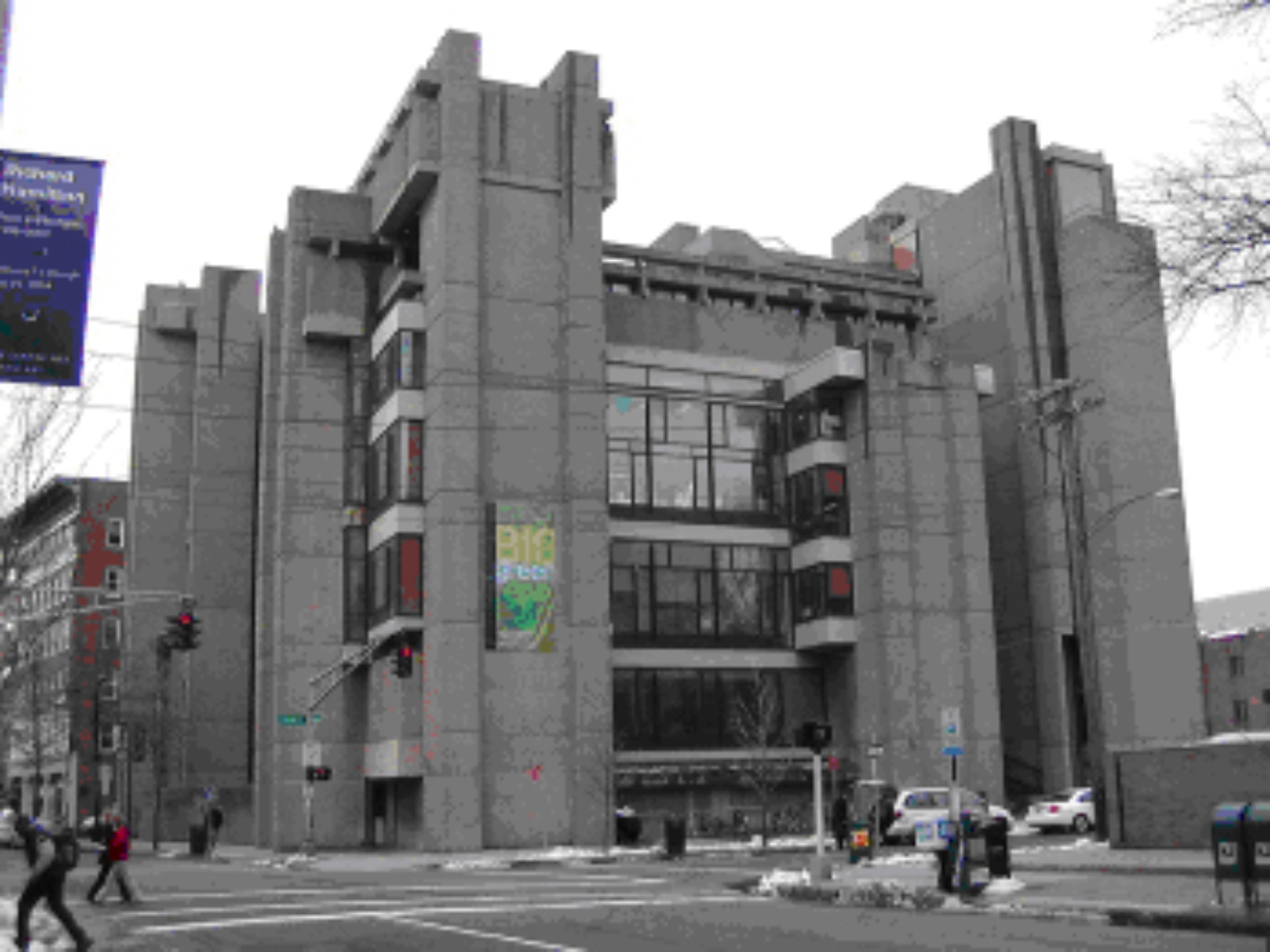
The Yale University Art and Architecture Building was designed by architect Paul Rudolph to hold a combined art and architecture curriculum, including graphic design and city planning. Previously, all of these departments were housed separately in the Yale Art Gallery, Weir Hall, and Street Hall on Chapel Street. The seven-story building (with 37 changes in level) anchors its corner site with its monumental slabs of corrugated concrete. The interior features two large open spaces, one serving as a gallery and meeting room on the main floor, the other housing the architecture studios on the fourth and fifth floors. Rudolph arranged the rooms around these open spaces in a pinwheel-like pattern. To give the walls a distinctive texture, Rudolph invented a new technique: workers poured concrete into ribbed forms, and then with hammers smashed the ribs to reveal the complex aggregate. Architect critic Paul Goldberger later called the it a “dynamic sculptural building,” a “disciplined formal statement, free of the wild eccentricities of many sculpturally active buildings yet in the view of many critics possessing a drama that seemed, to many, to be almost a summary statement of modern architecture.”