January 2012 E-News Brief
THREATENED: RICHARD NEUTRA KARACHI EMBASSY
Last January, it was announced that the United States Consulate Building in Karachi, Pakistan was to be closed and sold. Designed by Richard Neutra, in collaboration with Robert Alexander, the consulate was originally commissioned as the United States Embassy in Pakistan in 1955. The building was a part of an extensive postwar program of the Foreign Buildings Office to establish a clear presence abroad. At first the embassies and consulates commissioned reflected more traditional styles of architecture, as their operations and thus buildings were initially smaller in scale. However, later projects followed a more modern trajectory. Commissions were awarded to post-war architects like Walter Gropius (Athens), Marcel Breuer (The Hague), Edward Durell Stone (New Delhi), Josep Lluis Sert (Baghdad), Ralph Rapson (Stockholm, Copenhagen) and Eero Saarinen (London, Oslo) - to name only a few - and established a strong American design identity abroad.
When constructed, the U.S. Embassy in Karachi consisted of long block raised on columns providing an open but shaded area underneath. The long bands of small and narrow windows were fitted with shades in response to the hot Karachi climate. Like most embassy buildings of the period the building is placed close to the street, establishing a clear civic presence and providing easy access. The design, although consistent with the growing popularity of monumental modern design of the day, was the one of the first in Pakistan.
(photo credit: Institute of Architects, Pakistan)
In 1960 the embassy was downgraded to consulate use when the Pakistani capital relocated to Islamabad. During the 1970s and 1980s, the U.S. Consulate was used extensively for local cultural events, including art exhibits and film screenings. The building stands as a symbol of the beginning of the modern movement in Pakistan and is one of the few public buildings designed by Neutra. There appears to be no clear plans for future use after its impending sale, leaving its fate in limbo.
Regardless of its specific future use, one of the first steps will be to document the building properly. In addition, a petition has been created by architect and son Dion Neutra to help create awareness for this important piece of architectural heritage, urging that the building be documented and advocating for its proper preservation. For more information and to sign the petition, visit www.neutra.org.
-Contributed by Francine Morales, Docomomo US intern and Historic Preservation Master's Candidate at Pratt Institute
BEVERLY HILLS CITY COUNCIL APPROVES PRESERVATION ORDINANCE
On January 10, the Beverly Hills City Council formalized their commitment to preservation by voting unanimously in favor of the city's first historic preservation ordinance, crafted by the the Planning Commission with guidance from the Los Angeles Conservancy. As part of the ordinance the Council approved a local landmark designation process and the formation of a five-member Cultural Heritage Commission to oversee designation.
As reported in the Docomomo US October 2011 e-newsletter, in late September of last year the Beverly Hills City Council took a small step towards a preservation ordinance by voting in favor of a two-year pilot program based on California's Mills Act, which offers economic incentives to foster the preservation of residential neighborhoods and the revitalization of downtown commercial districts.
(Kronish House. Photo credit: J. Paul Getty Archive)
The decision this month to move ahead and establish a formal preservation ordinance arrives on the heels of an 11th hour purchase of the threatened Kronish House (1955), in which a preservation-minded buyer saved the Richard Neutra-designed residence from demolition. Due to the lack of a preservation ordinance in Beverly Hills, the sale of the house to a preservation-minded buyer was the only way to prevent its loss. Other sites have not been so lucky, and in recent months the city witnessed the loss of several historic buildings including John Lautner's Shusett House and the Beverly Hills Friars Club, designed by Sidney Eisenshtat.
Related links:
Los Angeles Times
Los Angeles Conservancy
When the U.S. entered the war with Europe in 1941, the home front embarked on the most monumental wartime mobilization in American history. This organization sparked a mass migration by the working-class American population to military installations and centers of defense production situated around the country, resulting in housing shortages in many of the nation’s cities. Rapid construction of worker housing in these defense communities was required, and the design of these units was heavily influenced by Government standards and restrictions, which called for a set of standardized wartime building practices in order to conserve materials, time, and labor.
![]() |
| Plan for first phase of Aero Acres, 1941. Map courtesy of the Martin Aviation museum archives. |
Operating under the provisions for constructing worker housing set forth by the US Housing Act of 1941, The Glenn L. Martin Aircraft Company chose a site in Middle River, Maryland for the construction of 310 units to house the workers at their nearby aircraft factory. The units built at this location, later named Aero Acres, were developed and built by the John B. Pierce Foundation, a non-profit organization researching innovative construction processes and prefabricated systems for use as low-cost housing options, and designed by the architectural firm of Skidmore, Owings, and Merrill. All of the homes in the neighborhood were constructed using an innovative prefabricated building system called “Cemesto”, which consisted of panels of pressed sugar-cane fiber sprayed with a coat of asbestos on each side. Each panel was a modular four-by-twelve-foot unit that slid horizontally into a light wooden frame.
![]() |
| Aero Acres. Architectural Forum, November 1942 |
The Cemesto houses of Aero Acres and their setting were meant to be ephemeral pieces of the recent past, but over time have come to be seen as culturally significant for symbolizing the sensibilities of their time, and architecturally significant as the product of progress in design and material research during WWII. The design of these houses were informed by the era in which they were developed, reflecting both a need and a desire for efficient planning and experimentation in the 1930’s and 40’s, sparked by the necessity to facilitate rapid mobilization for war-time production. This neighborhood is an exceptionally important example of wartime architecture, planning, and construction techniques. The prototype unit, still standing today, is an example of nationally innovative architecture, which employed a new building material essential to the massive mobilization program, and served as a model nation-wide throughout the war for the federal building program.
![]() |
|
| Top: Prototype unit, Aero Acres, April 1943. Bottom: Same unit, October 2011. |
Aero Acres functions in essentially the same way as it did when it was constructed 70 years ago. Most of the wartime prefab units survive, though altered by their owners in a variety of ways. In most cases, the Cemesto panels are sealed inside the interior and exterior wall siding of other materials. However, the challenge of designating these houses exists where alterations of existing design elements, as well as additions to the original unit, pose problems with respect to traditionally held views of how much integrity this neighborhood retains in the face of the ways these homes have been changed over time.
In order to define the basis of integrity inherent in this area, one must look at the history of the neighborhood itself for inspiration. These houses were meant to be transient structures to fulfill an immediate purpose. While much was written about what would actually happen to these housing developments after the war, no plans were actually laid out to address their future. This neighborhood now faces a very important reality – as these surviving structures turn 70 years old, there are changes taking place in the community that threaten its harmonious composition. Additions and alterations to original units over the past several decades are starting to affect the cohesive composition of the neighborhood, and this is creating a problem that can be likened to what Barbara Kelly dealt with at Levittown in her book Expanding the American Dream: Building and Rebuilding Levittown. What happens when the iconic image of a post-war prefabricated neighborhood starts to become unrecognizable, and what techniques can preservationists realistically employ to manage this change?
- Contributed by Elyse Marks, Historic Preservation Master's Candidate at Columbia University
Docomomo US wishes to acknowledge the passing of these acclaimed members of the architecture and design community:
Ricardo Legorreta (1931-2011), Mexican modernist architect
Chicago Tribune
Anne Tyng (1920-2011), architect and partner of Louis Kahn
New York Times
Eva Striker Zeisel (1906-2011), ceramic artist and industrial designer
New York Times
(L-R) Legorreta, credit: Chicago Tribune; Tyne, credit: Charles Fox/Philadelphia Inquirer; Zeisel, credit: www.evazeisel.com
![]() |
![]() |
![]() |
Edward Durell Stone: A son’s untold story of a legendary architect
Hicks Stone, author
Rizzoli; New York, New York. 2011.
334 pages with many illustrations, including plans and elevations
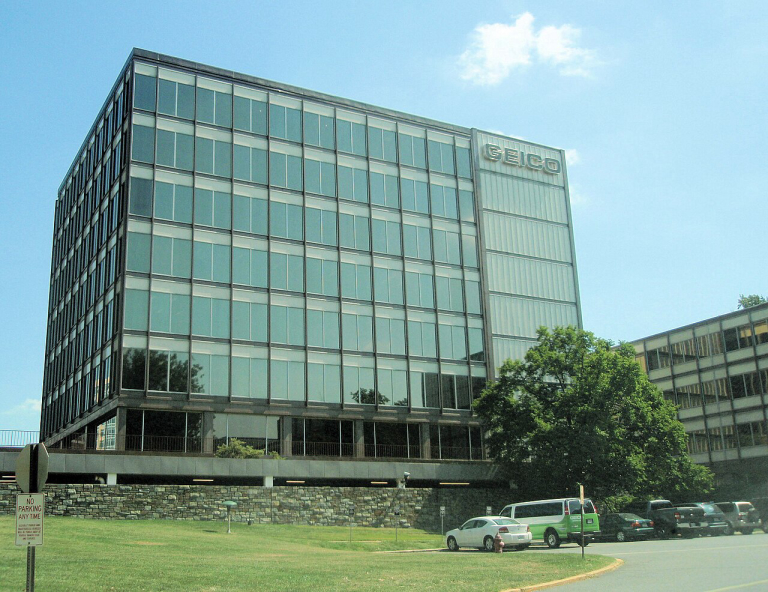
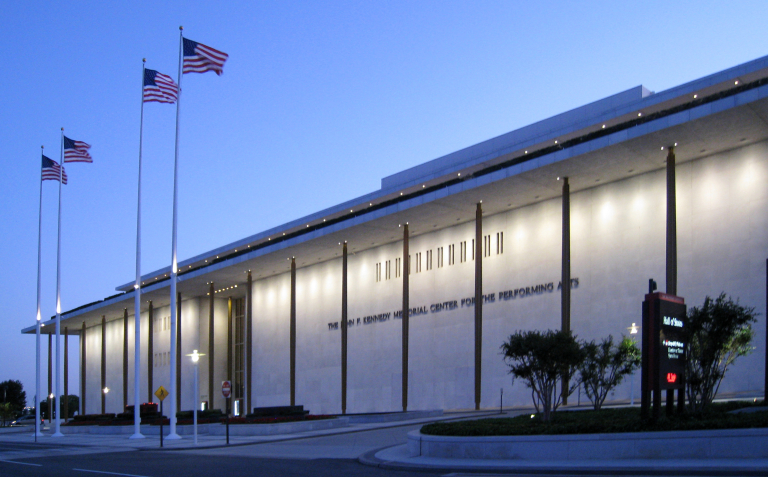
Edward Durell Stone is probably of the best recognized but least appreciated architects of the postwar period in the US. Many of his buildings did not receive much acclaim at the time, are threatened now or have been already demolished. Aside from Stone’s own publications, no comprehensive overview of his work existed until the publication of Hicks Stone’s recent book. Unlike Nathaniel Kahn’s narrative about his father, Louis Kahn, which is more a story of personal discovery than an architectural history, Hicks Stone seeks to present not only a personal view but also a comprehensive overview of the work of one of the most profilic architects of the period in this thoughtfully compiled and well-illustrated and annotated publication. The long list of projects at the end of the book alone should serve as a reminder of the importance of Edward Durell Stone.

PALM SPRINGS MODERNISM WEEK
February 16 - 26, 2012
Palm Springs, CA
Modernism Week is an exciting 11-day celebration of mid-century design, architecture and culture in Palm Springs, CA, home to some of the best examples of 20th century architecture in the United States. The festival includes architectural tours, films, lectures, parties and more. Organized by Palm Springs Preservation Foundation, the Palm Springs Modern Committee, the Palm Springs Historical Society, and the Architecture and Design Council of the Palm Springs Art Museum.
Visit www.modernismweek.com for more information and to reserve tickets.
WOOD IN THE 21st CENTURY
March 24 - 25. 2012
Cambridge, MA
This important symposium/training program will examine the basic material properties of wood, the role of thermal, mechanical, structural, and chemical properties on performance and durability, and the effects of environmental conditions on both traditional buildings, bridges, outdoor decorative elements, and sculpture and on modern structures and their ornamentation.
Click here to download the full conference schedule and registration form (PDF)
SOCIETY OF ARCHITECTURAL HISTORIANS
65th Annual Conference
April 18-22, 2012
Detroit, MI
Detroit will serve as both a welcoming host and a subject of study. While Detroit’s recent history has been one of deindustrialization and outmigration—common to many cities in the Midwest—its past includes a commitment to good design seen both in the products of the automobile industry and in the buildings connected to it. Twenty-two tours explore Detroit and its environs, including Eero Saarinen’s GM Technical Center and his work at Cranbrook, Mies van der Rohe’s Lafayette Park, Minoru Yamasaki’s buildings, modernism in Ann Arbor, and Detroit Modern.
Visit www.sah.org/2012 for full conference program.
EAHN 2012
May 31 - June 3, 2012
Brussels, Belgium
The European Architectural History Network (EAHN) Conference will be taking place in Brussels, Belgium from May 31-June 3 2012. For more information please visit www.eahn2012.org
Docomomo International Conference
August 2012 Espoo, Finland
Docomomo Suomi/Finland will host the 12th Docomomo International Conference in Espoo, Finland in 2012. The conference will be held in cooperation and with the support of the City of Espoo and Espoo City Museum.
Visit the conference website for conference program and registration information.